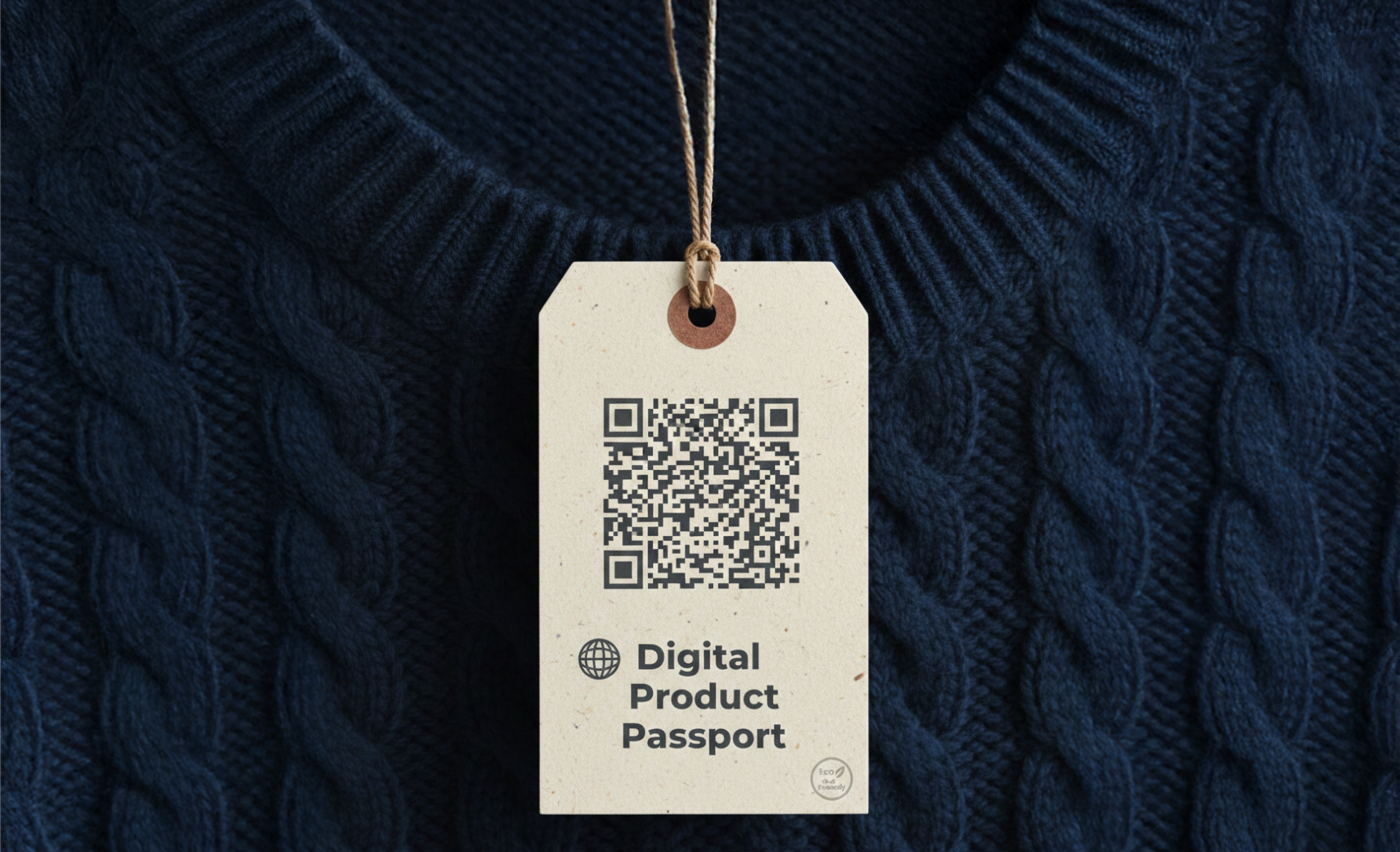
The Digital Product Passport is set to become mandatory for European manufacturing companies. The requirements have been defined by the European Commission under the Ecodesign for Sustainable Products Regulation (ESPR), which came into force in July 2024. For the textile and fashion sector, the critical preparation window is 2025–2027.
The question is no longer whether to comply, but how to do so without costly, last-minute projects. ModaSuite365 offers a concrete answer: a fashion ERP already structured to manage the data the DPP will require — without adding external modules or launching extraordinary migrations.
What is the Digital Product Passport and why does it matter for fashion
The Digital Product Passport is a tool that tracks the entire lifecycle of a product. In practice, every item sold in the European Union will need a digital identifier accessible via QR code or NFC tag, giving consumers, authorities and supply chain operators access to detailed information on materials, suppliers, production processes and environmental impact.
The textile sector has been placed among the priorities for the 2025–2030 period, with a delegated act expected in 2027. Once the new rules are adopted, brands will have at least 18 months before they become operative. This means that companies that start structuring their data today will have a significant competitive advantage over those that wait.
The fragmented data problem
The main challenge for many fashion companies is not technical, but organisational. The DPP requires consistent, structured and verifiable data — information that already exists within companies, but scattered across different systems: Excel for Bills of Materials, spreadsheets for materials, emails with suppliers, PDF files for certifications.
When the time comes to create the Digital Product Passport, reconstructing this history becomes complex, costly and error-prone. Many companies find themselves having to trace back years of production to recover information that should have been tracked continuously.
ModaSuite365 flips this approach: the data required for DPP compliance is already present in the ERP, because it is part of normal business operations. From the technical sheet to the Bill of Materials, from suppliers to production stages — everything is already connected and tracked.
How ModaSuite365 prepares companies for the Digital Product Passport
ModaSuite365 takes a pragmatic approach to the DPP, built on three pillars.
Data structure already aligned with requirements
A vertical fashion ERP naturally collects the information that the Digital Product Passport will require. ModaSuite365 natively manages:
- Material composition and fibre percentages
- Origin of raw materials and reference suppliers
- Production stages and facilities involved
- Accessory components and their specifications
- Certifications and regulatory compliance
- Seasonality and collections
This information is not collected "in preparation for the DPP" — it is part of the normal operational workflow. Companies already running on ModaSuite365 don't need to reconstruct anything: their product history is already tracked.
Integrated end-to-end traceability
ModaSuite365 ensures product traceability by maintaining the link between what is designed, produced, sold and declared. There is no separation between departments: everyone works on the same system, with the same data.
This approach drastically reduces the risk of inconsistencies. When a product is sold with an associated DPP, the information it contains truly reflects the production journey — not a retrospective reconstruction.
No extraordinary investment required
For companies already running on ModaSuite365, the Digital Product Passport will not require separate projects. There is no need for:
- Data migration projects
- Duplication of information across parallel systems
- Dedicated teams for retroactive data collection
When regulations are finalised and technical requirements are clear, ModaSuite365 will be able to extend its existing capabilities to natively generate and manage Digital Product Passports, integrating with specialised solutions such as Anima or SYSID.
Preparing today for tomorrow's DPP
The collections being worked on today will be on the market when the Digital Product Passport becomes fully operative. This is not just about complying with a future regulation — it is about correctly structuring product data for items that will be sold at the moment digital traceability becomes mandatory.
Companies already using ModaSuite365 have a concrete advantage: every product entered into the system is tracked with the information that will become regulatory requirements. No urgent projects to launch, no scrambling to catch up.
Immediate operational benefits
Beyond regulatory preparation, having a system already structured for the DPP delivers concrete operational benefits:
- Greater control over the supply chain and suppliers
- Fewer errors related to fragmented or duplicated data
- Ability to respond quickly to traceability requests from customers or partners
- A solid foundation for sustainability projects and environmental reporting
- The opportunity to leverage transparency as a distinctive brand asset
Conclusion: the Digital Product Passport is a strategic choice, not just a compliance obligation
The Digital Product Passport is an inevitable transformation for the European fashion industry. Companies that today work with fragmented data and disconnected systems will face costly and complex projects to comply.
ModaSuite365 does not replace the DPP platform — it is its data foundation. As a vertical fashion ERP, it organises and keeps product information up to date, ready to be transmitted to compliance solutions, making the adoption of the Digital Product Passport a natural evolution rather than a separate initiative.
Preparing today means avoiding the urgency of tomorrow. And in fashion, as always, those who anticipate change win.